
If you want business ownership without the overhead of a traditional storefront, home services deserve a closer look.
Voda Cleaning & Restoration combines two essential service categories under one franchise model:
- Recurring cleaning services for homes and commercial properties.
- Higher-value restoration services for urgent water and mold issues.
That combination gives prospective franchisees more than one way to build local revenue. It also places the brand in a category tied to property maintenance, health, safety, and emergency response.
Could this dual-revenue model fit your goals for 2026? Let’s take a closer look.
Explore the Voda Cleaning & Restoration franchise opportunity on FranCentral.
Voda Combines Cleaning and Restoration
Voda positions its model as “two franchises in one.”
The cleaning side includes:
- Carpet cleaning
- Floor cleaning
- Upholstery cleaning
- Tile and grout cleaning
- Additional specialty cleaning services
These services can create repeat business. Homeowners, property managers, offices, and commercial facilities often need professional cleaning more than once.
The restoration side addresses more urgent needs. These services include:
- Water damage restoration
- Water mitigation
- Mold remediation
- Air duct cleaning
- Related property restoration services
A water event cannot always wait for a convenient appointment. A burst pipe, storm, appliance leak, or flooding event can require fast action.
That urgency can create higher-value service opportunities. It can also introduce insurance-related work and commercial relationships. But demand, margins, insurance processes, and job volume vary by market. Treat the model as a business opportunity. Do not treat it as an earnings guarantee.
Recurring Cleaning Can Build the Customer Base
Cleaning may be the first service a customer needs.
A homeowner may schedule carpet or upholstery cleaning. A business may need recurring floor care. A property manager may need turnover cleaning between tenants.
Those interactions can create brand awareness. They can also open the door to additional services when a customer experiences water damage or another property issue.
This is one of the model’s key strategic ideas:
- Cleaning helps create regular customer contact.
- Regular customer contact can support referrals and repeat work.
- Restoration can add a higher-value service line when urgent needs arise.
The two sides can support one another. They are still operationally different. Cleaning may be planned and scheduled. Restoration may require rapid dispatch, specialized training, equipment, documentation, and coordination with customers, adjusters, or property professionals.
You should evaluate both sides separately before investing.

Essential Services Can Appeal Across Economic Cycles
People still need clean homes, offices, rental units, and commercial spaces.
They also need help when water or mold damages a property.
That essential-service positioning may appeal to entrepreneurs seeking an alternative to discretionary concepts. It can also provide multiple customer segments. Voda serves both residential and commercial customers, according to its franchise materials.
The potential customer base may include:
- Homeowners
- Renters and landlords
- Property managers
- Real estate professionals
- Hotels and hospitality businesses
- Offices and retail locations
- Senior living communities
- Insurance and restoration referral sources
- Commercial facility managers
No industry is recession-proof. Local competition, seasonality, weather, labor costs, insurance relationships, and customer acquisition expenses all matter.
Still, essential services can offer a compelling foundation for a local business. You are not selling a luxury product that customers can always postpone. You are solving practical property problems.
The Model Is Designed for a Lean Launch
Voda’s franchise materials describe a home-based model that can launch with a relatively lean structure.
The FranCentral listing states that the business can launch in approximately 30 to 90 days. Company materials also describe a limited initial employee requirement, with two to three non-licensed employees at launch.
A home-based model may reduce the cost of opening a customer-facing facility. It may also help you focus early capital on:
- Vehicles
- Cleaning and restoration equipment
- Insurance
- Payroll
- Marketing
- Technology
- Working capital
- Local business development
Lean does not mean simple.
You may still need space for equipment, vehicles, supplies, and administrative work. You may also need to hire, train, schedule, and retain reliable technicians. Restoration work may involve additional requirements depending on your state, municipality, insurance relationships, and service scope.
Ask Voda what your territory requires before you sign.
Technology and Lead Generation Support the Operating System
A home services franchise depends on more than equipment and uniforms.
It needs a system for answering calls, assigning jobs, tracking leads, measuring performance, and following up with customers.
Voda highlights several support tools and services, including:
- Centralized lead generation
- Commercial outreach
- Appointment setting
- A 24/7 call center
- Franchise technology
- Analytics through its Franchise Scoreboard™ platform
- Marketing systems and brand support
The call center may be especially important for restoration. A missed call can become a missed customer. A 24/7 response system may help franchisees handle inquiries outside traditional business hours.
Technology can also improve visibility. You should ask how the platform tracks:
- Lead source
- Conversion rates
- Average ticket
- Repeat customers
- Dispatch time
- Technician productivity
- Restoration referrals
- Commercial account activity
- Customer reviews
Technology is valuable when it drives better decisions. Do not assume that a branded platform automatically creates demand. Confirm what is included, what it costs, and what you are expected to manage locally.
National Growth Creates Momentum
Voda has attracted attention during a period of rapid franchise expansion.
In January 2026, PR Newswire reported Voda’s inclusion in Entrepreneur magazine’s Franchise 500®. That release cited more than 270 territories in 32 states at the time.
In May 2026, the International Franchise Association reported the appointment of Laura Butcaris as Voda’s president. The IFA article described 116 franchise owners across 34 states and almost 300 locations.
Recent 2026 company and industry reporting places Voda’s footprint at more than 300 locations across 34 states.
The company has also appointed Butcaris to support national accounts, franchise support, operational alignment, and multi-unit expansion. She brings more than 20 years of leadership experience across franchising, operations, strategic partnerships, revenue growth, and national accounts development.
Voda has also registered to operate in Illinois, adding another point of geographic expansion for prospective franchise buyers.
These milestones show momentum. They do not predict your results.
Unit counts can change. Territories can open or close. Franchise definitions can vary between sources. Confirm the current figures directly with Voda and review the current FDD before making a decision.

The Investment Requires Careful Planning
At publication, the FranCentral Voda listing provides the following details:
| Franchise detail |
FranCentral listing |
| Estimated total investment |
$176,169–$257,852 |
| Liquid capital required |
$75,000 |
| Franchise fee |
$59,500 |
| Royalty |
7% |
| Franchises listed |
60 |
| Franchised since |
2023 |
These figures are a starting point. They are not a substitute for the current Franchise Disclosure Document.
Recent Voda company reporting has cited different investment ranges. The January 2026 PR Newswire release listed startup costs of $201,374–$357,608, depending on vehicle leasing or purchasing. The May 2026 IFA article cited $206,659–$376,873.
Why do ranges differ?
Vehicle assumptions may change. Territory requirements may differ. Equipment packages may vary. FDD editions may use updated costs. Working capital estimates may also change.
Before investing, compare the FranCentral listing with the current FDD. Pay special attention to:
- Item 5: Initial fees
- Item 6: Other fees
- Item 7: Estimated initial investment
- Item 11: Franchisor assistance
- Item 12: Territory
- Item 19: Financial performance representations
- Item 20: Franchisee and outlet information
- Item 21: Financial statements
If Voda makes financial performance representations, review them in Item 19. Ask how many franchisees are included. Ask whether the data separates cleaning revenue from restoration revenue. Ask about gross sales, expenses, owner compensation, and time to profitability.
Your Market Will Shape the Opportunity
A dual-revenue model works differently in every territory.
Before you move forward, study your local market. Consider:
- Housing density and household income
- Commercial property concentration
- Apartment and rental inventory
- Weather-related water events
- Flooding and storm exposure
- Property age and maintenance needs
- Existing cleaning providers
- Existing restoration companies
- Local technician labor costs
- Insurance and licensing requirements
- Drive times between jobs
- Potential referral partners
A dense suburban market may provide strong residential demand. A market with many offices, apartments, hotels, and property managers may create commercial opportunities. A storm-prone area may generate restoration demand but also attract significant competition.
Ask a local expert to help you assess territory quality.
First-Time Buyers Should Ask Direct Questions
Are you new to franchising?
Do not rely on the sales presentation alone. Build a complete diligence process.
Ask Voda:
- How much revenue comes from cleaning versus restoration?
- How many franchisees currently offer both service categories?
- What percentage of leads comes from corporate marketing?
- What marketing expenses remain the franchisee’s responsibility?
- How does the 24/7 call center handle after-hours emergencies?
- What equipment must you purchase at launch?
- What licenses or certifications are required locally?
- How long does technician training take?
- What are the most common reasons franchisees underperform?
- How many franchisees have closed, transferred, or left the system?
- Can you speak with franchisees at different stages of growth?
- What does Item 19 show for revenue and profitability?
- Are multi-unit rights available in your preferred market?
- How are national accounts assigned and serviced?
- What happens when a lead falls outside your territory?
Then speak with a franchise attorney and accountant. Review the FDD with professionals who represent your interests.

Voda May Fit Hands-On and Growth-Oriented Owners
This opportunity may appeal to you if you want:
- A home-based launch
- Residential and commercial customers
- Repeat cleaning revenue
- Emergency restoration opportunities
- A recognized national brand
- Centralized marketing and lead support
- A business that can grow through local hiring
- Potential multi-unit expansion
It may not fit if you dislike operational urgency, field service management, technician recruiting, customer-service issues, or unpredictable job scheduling.
You do not need to be a restoration expert on day one. You do need to be willing to learn the business, manage people, protect service quality, and build local relationships.
Take the Next Step with FranCentral
Could Voda Cleaning & Restoration give you a stronger path beyond corporate America?
Start with the full Voda Cleaning & Restoration franchise listing. Review the model, investment information, and available territory details.
Then compare Voda with other opportunities in residential services franchises. You may discover a concept that better matches your capital, experience, lifestyle, or growth plans.
Want local guidance? Connect with a FranCentral franchise consultant near you. FranCentral can help you evaluate opportunities and connect with experienced consultants at no cost to franchise seekers.
Stay in the know. Explore the opportunity before the best territories are claimed.
Ready to investigate Voda Cleaning & Restoration?
Review the FranCentral listing and request more information.
Investment figures, unit counts, expansion claims, services, and support details may change. Information in this article is for educational purposes only and does not constitute an offer to sell a franchise. Review Voda’s current FDD and consult qualified legal and financial professionals before investing.

The U.S. automotive franchise market is entering 2026 with a powerful tailwind.
Americans are keeping their vehicles longer. New vehicle prices remain high. Repair and maintenance costs continue to rise. Meanwhile, the U.S. aftermarket is projected to grow 5.4% in 2026 to approximately $599.7 billion, according to the Auto Care Association.
That creates a compelling investment outlook for aspiring franchise owners.
Automotive franchises are not immune to economic pressure. No business is. But they offer something investors value in uncertain markets: essential services, repeat customers, and multiple paths to revenue.
Could automotive be the play that gives you more control in 2026?
The U.S. Vehicle Fleet Is Getting Older
The average age of a U.S. light vehicle reached 12.8 years in 2025, according to S&P Global Mobility.
Industry projections place the 2026 average at approximately 12.8 to 12.99 years, or roughly 13 years. IBISWorld and other analysts point to the same trend.
This matters because older vehicles need more attention.
They require:
- Brake and suspension work.
- Oil changes and fluid service.
- Tire replacement.
- Battery and cooling-system repairs.
- Glass replacement.
- Transmission and drivetrain work.
- Cosmetic upgrades and protective services.
Why are drivers holding onto older cars? The answer is simple. New vehicles are expensive. Many consumers would rather maintain a vehicle they already own than take on a large monthly payment.
That “repair rather than replace” behavior supports automotive service businesses through a wide range of economic conditions.
Aftermarket Growth Is Creating Room for New Operators
The Auto Care Association projects total U.S. auto care sales will reach approximately $599.7 billion in 2026, up 5.4% from the prior year.
That is a massive market. It includes maintenance, repair, parts, accessories, customization, glass, coatings, and other services.
The opportunity is especially strong because the market is fragmented. Independent operators still serve much of the country. Franchise brands can compete with national marketing, standardized training, technology, purchasing support, and established customer expectations.
You do not have to build trust from zero.
You can enter with a recognized brand and a proven operating system.
The Bureau of Labor Statistics’ motor vehicle maintenance and repair CPI data also shows that auto maintenance and repair prices continue to rise. As repair costs increase, operators must manage pricing, labor, and customer experience carefully. But rising prices can also support revenue growth when paired with strong demand and transparent service.
Recurring Revenue Makes the Category More Durable
Many automotive businesses benefit from repeat purchasing behavior.
A customer may not visit every month for a major repair. However, they still need regular service over the life of their vehicle. That creates a long customer relationship instead of a one-time transaction.
Some automotive operators strengthen this model with:
- Oil-change programs.
- Preventive maintenance memberships.
- Tire and alignment packages.
- Fleet service agreements.
- Warranty and service plans.
- Detailing subscriptions.
- Seasonal inspections and promotions.
Recurring revenue does not eliminate risk. It can, however, make demand more predictable and improve customer retention.
The best franchise concepts also give you multiple revenue streams. A repair center may offer maintenance, diagnostics, tires, brakes, and drivetrain work. An automotive styling center may combine tinting, wraps, protective films, detailing, accessories, and maintenance.
This diversification can help insulate the business when one service line slows.

Christian Brothers Automotive Shows the Strength of the Model
Christian Brothers Automotive is one of the most notable growth stories in the category.
The brand reported 339 locations open by mid-2026, along with 14 new franchise awards and a 96-unit development pipeline. Its April 2026 FDD reported an average unit volume of $2,877,457 for 302 locations that were open for the full 2025 calendar year.
That figure comes from Item 19 of the FDD. It is not a guarantee of future performance. Individual results vary by market, management, labor availability, operating costs, and many other factors. Review the complete FDD and consult qualified advisors before making an investment decision.
Still, the data demonstrates the scale possible in full-service automotive repair.
Christian Brothers also makes the category accessible to people who are not technicians. The franchisor states that automotive experience is not required. Leadership ability, business discipline, and a commitment to customer service matter more.
That distinction is important.
You may be a corporate manager, military leader, sales executive, or operations professional. You do not need to rebuild engines yourself to lead a strong automotive business. You do need to recruit capable technicians, follow the system, manage people, and serve your local market.
Explore the Christian Brothers Automotive franchise opportunity.
Automotive Expansion Is Happening Across Multiple Segments
Growth is not limited to traditional repair shops.
Tint World is targeting 85 new franchise awards and more than 50 additional locations in 2026. Its model covers tinting, vehicle wraps, paint protection film, detailing, accessories, electronics, ceramic coatings, wheels, tires, and maintenance.
LINE-X is also expanding. The brand has communicated plans for at least a dozen new locations in 2026, with later company messaging pointing to a 17-location target across the United States and Canada.
These developments show how the automotive aftermarket is broadening. You can choose an essential repair concept, a parts-distribution model, or a higher-margin customization business.
The right choice depends on your capital, experience, territory, and ownership goals.
FranCentral Automotive Franchise Listings Give You Multiple Lanes
FranCentral features automotive opportunities across different investment levels and business models.
Each concept offers a different path.
Christian Brothers Automotive focuses on full-service repair and maintenance.
LINE-X specializes in protective coatings and vehicle customization.
Glass Doctor serves auto and flat-glass repair markets.
Turbo Tint combines automotive and architectural window film with paint protection film.
Mr. Transmission offers transmission repair alongside broader automotive services through its co-brand model.
Tint World operates a diversified automotive styling platform with multiple profit centers.
1-800 Radiator & AC serves repair shops, dealerships, parts stores, body shops, and other business customers through parts distribution.

You Need to Evaluate the Market, Not Just the Brand
A strong franchise can still struggle in the wrong territory.
Before you invest, evaluate:
- Local vehicle age and household demographics.
- Traffic patterns and visibility.
- Competition from dealerships and independent shops.
- Technician availability.
- Commercial and fleet demand.
- Real estate and construction costs.
- Territory protection.
- Training and technology support.
- Item 19 financial performance disclosures.
- Your own liquidity and financing capacity.
You should also consider your preferred role.
Do you want to manage technicians and a service center? Would you rather build business-to-business relationships? Are you interested in a customer-facing styling concept? Do you want to grow one location or pursue a multi-unit strategy?
The answers will narrow your options quickly.
Local Knowledge Gives You an Investment Advantage
National franchise data is useful. Local insight is better.
A market may look attractive on paper but have limited technician supply. Another may have strong vehicle demand, high traffic, and few established competitors. A local consultant can help you identify those differences before you commit capital.
FranCentral connects aspiring franchisees with consultants who understand local markets. Your consultant can help you compare automotive concepts, assess territories, organize discovery calls, and clarify the next steps.
Connect with a local franchise consultant through FranCentral.
Ready to claim your place in a growing essential-services market?
Connect with a local FranCentral consultant to explore automotive franchise opportunities matched to your goals, capital, and community.
Find Your Local Franchise Consultant
The 2026 Automotive Outlook Is Built on Necessity
The investment case is straightforward.
The U.S. vehicle fleet is aging. New vehicle prices are pushing owners toward repairs. Aftermarket spending is growing. Maintenance costs are rising. Franchise systems are adding locations and developing new territories.
That does not mean every automotive franchise will succeed.
It means the category has the core ingredients many entrepreneurs seek: durable demand, repeat customers, operational systems, and room to scale.
Are you looking for an alternative to corporate America? Do you want to build an asset instead of simply collecting a paycheck? Could your leadership skills transfer to a service business?
Now is the time to stay in the know.
Browse FranCentral’s automotive franchise marketplace to compare hot new franchises, investment requirements, and business models.
Your next business may already be in the driveway.
Secure an informed first look at available automotive franchise territories with guidance from a local expert.
Explore Automotive Franchises | Connect With a Consultant
Investment amounts and location counts are based on FranCentral listing information available at publication. Franchise availability, costs, financial performance, and territory terms can change. Review each franchisor’s current Franchise Disclosure Document and consult qualified legal and financial professionals before investing.

Outdoor pest control is having a moment.
Homeowners want to enjoy their yards without mosquitoes, ticks, fleas, wasps, and other pests. Commercial customers need reliable protection for events, patios, common areas, and outdoor venues.
That creates a compelling opportunity for service businesses built around repeat customers.
Mosquito Joe is one of the better-known brands in this space. The outdoor pest control franchise operates under Neighborly®, a large home services franchisor with more than 30 brands and over 5,000 franchises across nine countries.
But is Mosquito Joe a smart franchise investment for you?
Let’s examine the model, costs, recurring revenue potential, market conditions, and key questions you should ask before moving forward.
Mosquito Joe focuses on outdoor pest control
Mosquito Joe provides pest control services for residential and commercial customers. The core offering includes treatments for:
- Mosquitoes
- Ticks
- Fleas
- Wasps and hornets
- Rodents
- Other outdoor pests
- Outdoor events and commercial properties
- Barrier sprays and select misting systems
The business is designed around outdoor service. Technicians typically do not need to enter customers’ homes.
That matters.
You can operate with less real estate than a traditional retail or home services business. The official franchise materials state that owners may operate from home if local zoning allows it. Some owners may use a small office or warehouse instead.
The model also relies on routes, vehicles, trained technicians, scheduling systems, and recurring customer plans. That can help you build density in a defined territory over time.
Pest control demand continues to grow
Pest control is an essential service. Customers may delay certain discretionary purchases. They are less likely to ignore persistent mosquitoes, ticks, rodents, or other pests affecting their homes and outdoor spaces.
According to the National Pest Management Association’s 2025 industry report, U.S. structural pest control service revenue reached $13.416 billion in 2025. That was a 6% increase over 2024.
The report also found that:
- Nearly 13.29 million residential customers received professional pest control services.
- Recurring revenue represented 85.4% of residential pest control revenue.
- Commercial pest control revenue increased by nearly 7%.
- 66.8% of surveyed operators expected residential service revenue to grow in 2026.
These numbers explain why pest control remains one of the most attractive categories in home services.
The industry is fragmented. Demand is repeat-based. Customers value trust and reliability. And many service areas still have room for a recognizable local operator.
Recurring service plans create revenue visibility
Mosquito Joe’s model is built around seasonal and repeat service.
A customer may sign up for a series of treatments during the active pest season. The franchise then returns on a scheduled basis. If the service performs well, that customer may renew the following year.
This creates a subscription-like revenue stream.
It does not eliminate seasonality. Mosquito control can be highly seasonal depending on your climate and territory. But recurring customers can make planning more predictable than a business based entirely on one-time jobs.
You should track several metrics closely:
- Customer acquisition cost
- Renewal rate
- Average revenue per account
- Revenue per service route
- Technician productivity
- Chemical and supply costs
- Labor utilization
- Route density
- Cancellation and re-service rates
The goal is not simply to add customers. It is to build profitable routes with strong retention.
That is where margin potential comes from. Dense routes reduce drive time. Repeat customers reduce the need to sell from scratch every season. Standardized treatments can make training and scheduling more efficient.
Still, high margins are not automatic. Labor, fuel, insurance, licensing, marketing, weather, and customer acquisition all affect your results.
Mosquito Joe benefits from Neighborly’s platform
Brand backing is one of Mosquito Joe’s biggest advantages.
The franchise is part of Neighborly. That gives owners access to a broader infrastructure than they would typically have as independent operators.
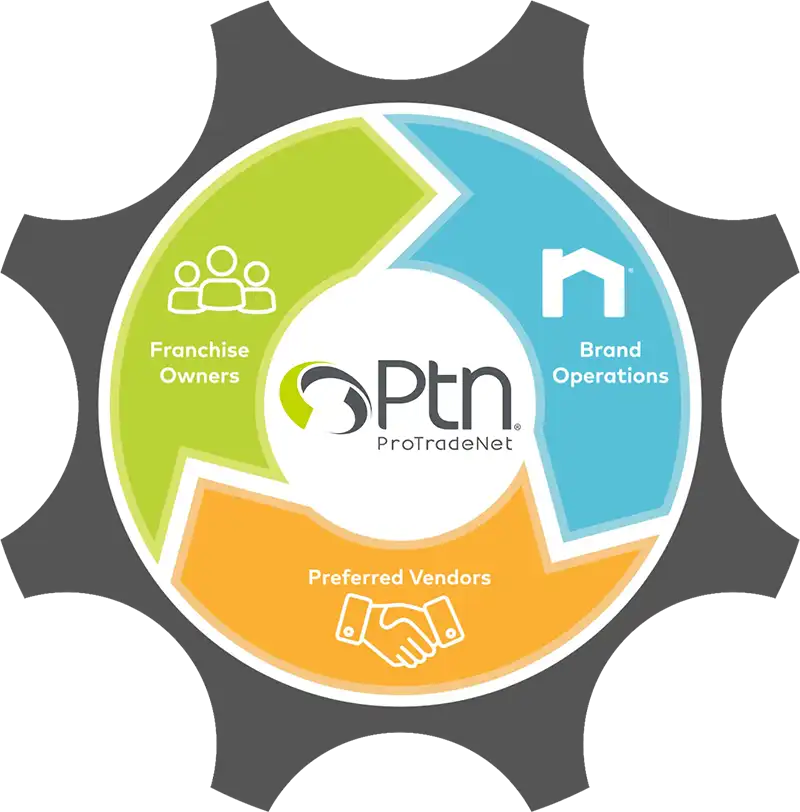
According to the Mosquito Joe franchise system overview, support can include:
- Initial and ongoing training
- Marketing resources
- Localized websites and digital campaigns
- A call center
- Scheduling and customer management technology
- Operational guidance
- Entomology and technical resources
- Preferred vendor discounts
- ProTradeNet® purchasing and rebate opportunities
- Potential cross-brand referrals within the Neighborly network
Mosquito Joe also states that owners complete training through MoJo University. Training covers business operations, equipment, compliance, marketing, and service standards.
This backing can shorten the learning curve. You do not have to create a brand, operating manual, marketing system, and technology stack from scratch.
You still need to lead the business. You still need to recruit, sell, manage cash flow, and deliver excellent service. But the franchise system gives you a framework.
The 2026 investment is lower-overhead, not low-risk
The 2026 Mosquito Joe Franchise Disclosure Document lists an estimated initial investment of $150,155 to $191,575 for a single franchise.
That includes an initial franchise fee of $42,500 for a territory containing approximately 25,000 to 35,000 targeted households.
The investment range includes expenses such as:
- Direct marketing and launch programs
- Local marketing
- Vehicles and vehicle upfit
- Equipment and supplies
- Insurance
- Licenses
- Technology
- Training
- Professional fees
- Initial working capital
The franchisor also lists minimum financial qualifications of approximately:
- $50,000 in liquid capital
- $250,000 minimum net worth
These requirements are separate from the full investment amount.
The model may have lower real estate costs than a storefront franchise. However, you should not overlook the marketing requirements. The 2026 FDD includes significant initial and ongoing marketing obligations.
That is why you should review the FDD with a franchise attorney and accountant. Pay close attention to Item 6, Item 7, Item 19, and Item 20.
Ongoing fees affect your break-even point
The 2026 FDD lists several ongoing fees. These include:
- A license fee of 10% of gross sales up to $500,000 per territory
- A reduced 7% license fee on gross sales above $500,000 in the same calendar year
- A 2% MAP or national marketing fee
- Potential local marketing group contributions of up to 2%
- Monthly software fees currently listed at $474.45
- A monthly SEO program fee currently listed at $325
- Call center fees currently listed at $199.99 per month plus $25 per closed sale
- Direct marketing program fees that may be $37,000 annually, subject to the terms and thresholds in the FDD
These costs can support lead generation, technology, and brand development. They also influence your operating margin.
Build a conservative financial model before you invest. Run the numbers at multiple revenue levels. Include slower customer growth, higher labor costs, delayed renewals, weather disruptions, and additional working capital.
A business can have strong recurring revenue and still struggle if fixed costs are too high.
Territory quality is critical
Mosquito Joe territories are not interchangeable.
The 2026 FDD defines a targeted household as a single-family detached home with estimated annual gross income of at least $125,000. A territory generally includes 25,000 to 35,000 targeted households, although the actual opportunity depends on geography, density, competition, climate, and local demand.
Before selecting a territory, study:
- Pest pressure. How long is the service season? Which pests are most common?
- Household density. Can technicians serve customers efficiently?
- Income levels. Can homeowners support recurring outdoor services?
- Competition. Which national and independent pest control companies already operate there?
- Commercial demand. Are there venues, HOAs, parks, restaurants, or event spaces?
- Licensing rules. Does your state require a certified applicator or specific experience?
- Hiring conditions. Can you recruit and retain technicians during peak season?
- Expansion potential. Could you add adjacent territories or related services later?
Mosquito Joe’s FDD also notes that pesticide licensing and local regulations vary. You are responsible for ensuring that your business and employees meet all applicable requirements.
You should validate the model with franchisees
Franchise marketing materials show the opportunity. Franchisees show the operating reality.
Speak with current and former owners listed in Item 20 of the FDD. Ask direct questions:
- How long did it take to reach break-even?
- What percentage of customers renew?
- How accurate were the startup cost estimates?
- What are the true seasonal staffing challenges?
- How effective are the required marketing programs?
- How much owner involvement is required?
- What happens during a poor weather season?
- Which expenses were higher than expected?
- Would they buy the franchise again?
You should also review any available financial performance information in Item 19. Do not rely on averages alone. Ask how performance varies by territory age, region, customer mix, and owner involvement.
Mosquito Joe may fit hands-on business builders
This opportunity may appeal to you if you want:
- A home services business with repeat customers
- A recognizable consumer brand
- A route-based operating model
- Lower real estate requirements
- Multiple residential and commercial revenue streams
- Access to training and technology
- The potential to expand into multiple territories
It may not fit if you dislike seasonality, hiring, local sales, or operational management.
You do not need prior pest control experience, according to the official franchise materials. But you do need leadership, customer service, sales, financial discipline, and team-building skills.
Are you ready to build a service business instead of another corporate career?
Explore home services franchise opportunities
Mosquito Joe stands out because it combines a recurring service model with a strong home services platform. The market is growing. Customer demand repeats. And the business can operate with less real estate than many traditional franchise concepts.
The opportunity still requires serious due diligence.
Review the current FDD. Compare territories. Model the fees. Talk to franchisees. Confirm licensing requirements. Then decide whether the business matches your capital, goals, and preferred lifestyle.
Want to compare Mosquito Joe with other brands?
Explore FranCentral’s home services franchise directory to review franchise opportunities across residential services. You can also connect with a local franchise consultant for personalized guidance at no cost to you.
Stay in the know about hot new franchises and opportunities built for your future.

In the United States, pet owners are spending more on care, convenience, and preventive wellness.
That creates room for new franchise models.
Scenthound is one of the most compelling examples.
Founded in 2015 in Jupiter, Florida, Scenthound positions itself as the first membership-based pet wellness franchise focused on routine dog hygiene. Instead of relying mainly on occasional grooming appointments, the brand builds its business around monthly visits, recurring memberships, wellness tracking, and add-on services.
The result? Rapid expansion.
Scenthound crossed the 140-location milestone in 2026. Its official overview now lists more than 160 Scenters across the United States, while the brand continues developing a much larger pipeline. Public figures can vary based on timing and whether planned locations are included, but the direction is clear: Scenthound is scaling quickly.
The Pet Economy Is Still Expanding
The market opportunity is broad.
The American Pet Products Association projects total U.S. pet industry sales of $165 billion in 2026. The organization also reports that approximately 95 million U.S. households own a pet.
That is a massive customer base.
It also reflects a major change in consumer behavior. Dogs are increasingly treated as family members. Owners are willing to spend on recurring services that support comfort, hygiene, appearance, and quality of life.
APPA’s 2026 projections include:
- $69.7 billion for pet food and treats
- $35.6 billion for supplies, live animals, and over-the-counter medicine
- $42.4 billion for veterinary care and product sales
- $14.9 billion for other services, including grooming, boarding, insurance, training, and walking
Scenthound operates within that final services category. But its model also reaches into the broader wellness trend. The brand is not simply selling a bath or haircut. It is encouraging pet parents to adopt a routine.
Scenthound Makes Routine Care the Product
Traditional grooming is often event-driven.
A dog visits when its coat becomes difficult to manage, when a special occasion is approaching, or when the owner finally finds an available appointment. Scenthound takes a different approach. The brand centers its offering on regular hygiene and preventive care.
Its S.C.E.N.T. Check® framework focuses on:
- Skin
- Coat
- Ears
- Nails
- Teeth
- Glands
The standard service package generally includes bathing, ear cleaning, nail trimming, teeth brushing, and a wellness check. Customers can add services such as haircuts, blow-drying, nail grinding, de-shedding, and other treatments based on their dog’s needs.
This creates a more consistent customer relationship.
The owner does not need to remember when the next appointment should happen. The membership and app help establish the schedule. Team members see the same dogs repeatedly. Wellness information can be tracked over time.
Scenthound describes this as a shift from reactive grooming to proactive wellness.
That distinction matters for franchisees. A recurring routine can make demand more predictable than a business dependent entirely on one-off visits. It can also create more opportunities for retention, upgrades, retail sales, and referrals.
The Membership Model Supports Recurring Revenue
The core business model is simple.
A customer pays a monthly membership fee. In return, the dog receives a routine wellness visit each month. Scenthound offers three membership options, with plans varying by location and benefits. The company states that two membership offerings include 24/7 access to a veterinarian through the brand’s mobile app.
The model creates several potential advantages for the operator:
-
Recurring billing
Membership revenue can provide a more consistent base than purely transactional sales.
-
Higher visit frequency
Monthly appointments create more customer touchpoints than grooming visits scheduled every several weeks or months.
-
Built-in retention opportunities
A dog that receives regular care is more likely to remain connected to the same location.
-
Add-on revenue
Customers can purchase services beyond the core membership, including haircuts and specialty treatments.
-
Better customer data
The app supports booking, membership management, service history, and wellness scores.
-
Stronger local relationships
Repeated visits help staff build familiarity with dogs and their owners.
The membership strategy does not guarantee profitability. No franchise model does. Labor, rent, local demand, pricing, customer retention, and execution all matter.
But it does give franchisees a clear operating framework. You are not just waiting for customers to call when they need a grooming appointment. You are building a repeatable care schedule around an ongoing need.
Growth and VMG Backing Add Momentum
Scenthound’s growth has attracted institutional attention.
In October 2025, the brand announced a partnership with VMG Partners, a growth equity firm known for investing in consumer brands across pet, wellness, beauty, and food categories.
Scenthound describes the partnership as support for its next phase of growth, technology investment, national expansion, and membership development. The company’s founders, Tim and Jessica Vogel, continue to lead the business.
The backing is significant for two reasons.
First, it gives the brand access to additional capital and strategic expertise. Franchise systems need infrastructure as they grow. They need training, technology, marketing, real estate support, field operations, and leadership depth.
Second, it validates the size of the category Scenthound is trying to create. VMG identified a differentiated model, an expanding membership base, a large consumer market, and a franchise system with strong momentum.
Scenthound’s 2026 growth update reported 33 new locations opened in 2025, 124 licenses sold, and 25% systemwide revenue growth. The company also stated that it had finalized plans for more than 400 franchised and corporate-owned locations across 32 states.
Those numbers show the difference between a small local grooming concept and a national franchise platform.
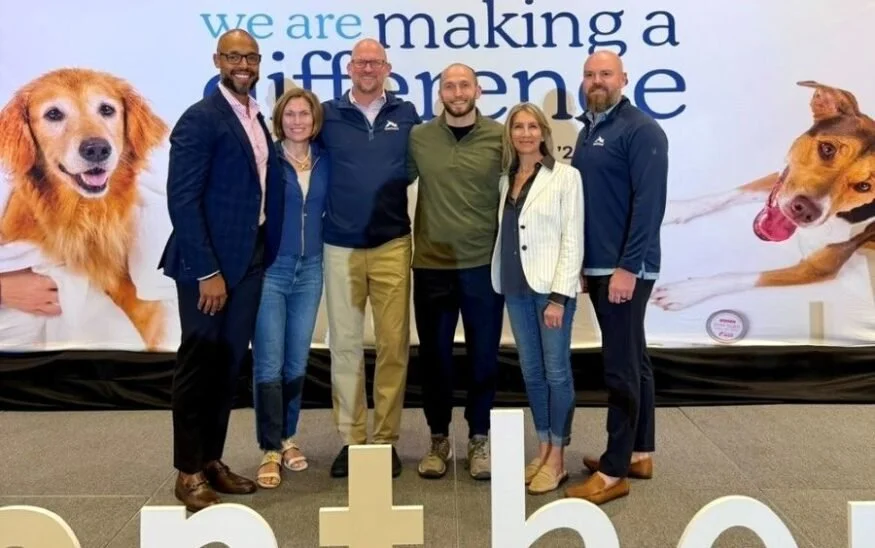
The Investment Range Requires Serious Planning
Scenthound is not a low-cost, home-based franchise.
According to the brand’s published costs and fees information, prospective franchise partners should review the following figures:
- Estimated initial investment: $328,099–$549,869
- Minimum liquid capital: $150,000
- Minimum net worth: $500,000
- Initial franchise fee: $49,900
- Royalty fee: 6% of gross revenue
- National advertising fund: 1.5% of gross revenue
- Multi-unit agreements: Available
- Veteran discounts: Available
These numbers are planning estimates. Your actual investment will depend on your market, real estate, construction requirements, equipment, staffing, insurance, professional fees, and working capital needs.
Always review the current Franchise Disclosure Document before making a decision. The FDD is the source for the brand’s current financial obligations, system data, legal disclosures, and franchisee information.
A franchise consultant can also help you compare Scenthound with other pet service opportunities and evaluate whether the concept fits your capital, goals, and local market.
Scenthound Appeals to Operators Who Want Predictability
Who should pay attention to this model?
You may be a strong candidate if you:
- Want to operate in the growing pet care sector
- Prefer a membership or subscription-based business model
- Have experience in operations, sales, customer service, or multi-unit management
- Want a consumer-facing business with strong community potential
- Have the financial capacity for a $328,099–$549,869 initial investment
- Are comfortable managing employees and repeat customer relationships
- See value in technology, data, and structured wellness routines
You do not necessarily need to be a professional groomer. But you do need to be a capable operator. Your success will depend on hiring well, delivering consistent service, maintaining customer satisfaction, and managing the numbers closely.
Love dogs? That helps.
Operational discipline matters even more.

Compare Pet Franchise Opportunities Before You Commit
Scenthound is not the only way to enter the pet economy.
FranCentral’s pet care franchise marketplace features opportunities across grooming, mobile pet services, dog training, daycare, waste removal, and other categories. Investment levels vary widely. For example, listings on the platform include mobile grooming, dog daycare, training, and pet waste services.
That variety matters.
The best franchise for you depends on your available capital, preferred role, target territory, staffing plan, real estate strategy, and growth goals. A membership-based storefront may fit one entrepreneur. A mobile service model may fit another.
What kind of customer relationship do you want to build? Do you prefer recurring memberships, mobile convenience, training programs, or daily pet care?
Stay in the know before you choose.
Your Next Move Is Local Research
Scenthound’s growth story shows how a familiar service can become a scalable franchise model.
The brand took routine dog hygiene and packaged it into a membership. It added wellness tracking, technology, optional services, and a repeatable customer experience. It then attracted franchise partners and growth-equity backing in a $165 billion pet economy.
That combination deserves your attention.
If you are exploring pet ownership businesses, start by comparing the numbers. Review the investment range. Study the membership economics. Examine local competition. Ask how often customers purchase. Then compare Scenthound with other pet franchise opportunities.
Ready to find your edge?
Explore pet franchise opportunities on FranCentral and connect with a local franchise consultant who understands your market. Guidance is available at no cost to franchise seekers.
Your next business could be waiting in the fastest-growing corner of the pet economy.
Stay in the know. Explore the hot new franchises. Then decide which opportunity gives you the strongest path toward ownership.

Owning one franchise location can change your career. Owning multiple locations can change your financial future.
But multi-unit success does not come from simply opening more doors. It comes from building a business that can perform consistently without depending on you every hour.
What separates top franchisees from those who struggle? Discipline. Strong systems. Better people decisions. And a clear growth plan.
In 2026, smart expansion means more than chasing unit count. It means protecting cash flow, improving existing locations, and choosing opportunities that can scale in your market.
Successful Franchisees Master the First Unit
Your first location is your proving ground.
Before you think about unit number two, you need to understand how the business works. That means learning the franchisor’s operating model, tracking your financial performance, and building a reliable customer base.
Top franchisees do not rush this stage. They focus on:
- Consistent sales and healthy margins
- Accurate monthly profit-and-loss reporting
- Labor and inventory control
- Strong customer reviews and retention
- Repeatable opening, closing, and service procedures
- A capable general manager or operating leader
The goal is not to become the best employee in your business. The goal is to build the foundation for a business that can run well when you are not present.
Industry reporting supports this measured approach. Multi-unit operators surveyed by Franchising.com emphasized unit profitability, financial discipline, employee retention, and operational consistency as priorities for 2026.
That is an important lesson. Growth starts with control.

Top Operators Build Systems Before They Build Locations
A single location can sometimes survive on memory and personal oversight. Two or more locations cannot.
As you expand, informal management creates inconsistency. One unit follows the process. Another improvises. Customers notice. Employees get confused. Costs rise.
Successful franchisees document the way the business should operate. They create playbooks for:
- Hiring and onboarding
- Employee training
- Scheduling
- Customer service
- Inventory management
- Local marketing
- Quality control
- Incident response
- Weekly and monthly reporting
These systems make expectations clear. They also make training faster for new employees and managers.
Technology matters here, too. A shared point-of-sale system, payroll platform, scheduling tool, and reporting dashboard can help you compare locations in real time. You should be able to answer simple questions quickly:
- Which unit is meeting its sales goals?
- Where are labor costs rising?
- Which location has the strongest customer retention?
- Are inventory problems isolated or system-wide?
- Which manager needs support?
The Bennett Thrasher 2026 franchise outlook identifies technology integration, financial discipline, and standardized systems as major drivers of franchise scalability.
Technology does not replace leadership. It gives you better information for making leadership decisions.
Financial Discipline Protects Your Expansion Plan
Many franchisees do not fail because they lack ambition. They fail because they expand before the numbers support it.
Opening a second location requires more than the initial franchise investment. You may also need working capital for hiring, training, marketing, rent, equipment, construction overruns, and slower-than-expected ramp-up.
Top franchisees build conservative financial models. They test several scenarios:
- Base case: What happens if sales meet expectations?
- Downside case: What happens if sales are 20% lower than expected?
- Upside case: Can your team and systems handle stronger demand?
You also need to understand your debt obligations. Use realistic performance assumptions. Do not base borrowing decisions on your most optimistic forecast.
Before investing, review the franchisor’s Franchise Disclosure Document. Pay close attention to the investment ranges, fees, territory terms, litigation history, and any financial performance information included in Item 19. Speak with current and former franchisees. Review the numbers with an attorney and an accountant.
FranCentral helps you begin that research with transparent franchise details, including minimum investment, franchise history, and location counts.
For example, the Line-X franchise listing provides an investment estimate, founding information, and location count in one place. Those details do not replace due diligence. They help you ask better questions before you move forward.

People Become Your Growth Engine
You cannot personally manage every shift, customer interaction, and hiring decision across multiple units.
At some point, your team becomes your greatest source of leverage.
Top franchisees identify high-potential employees early. They develop assistant managers into general managers. They create clear promotion paths. They train leaders to manage performance, solve problems, and protect the customer experience.
This requires consistent habits:
- Hold weekly leadership meetings.
- Set measurable goals for every location.
- Coach managers instead of taking over their responsibilities.
- Recognize strong performance.
- Address problems quickly.
- Cross-train employees for key functions.
- Maintain consistent standards across every unit.
Labor remains one of the biggest challenges for franchise operators in 2026. The solution is not always to cut staffing. Poor staffing can damage service, morale, and revenue.
The better question is this: How can you create a productive team that wants to stay?
Retention lowers training costs. Experienced managers also help protect consistency as you grow.
Smart Owners Cluster Their Locations
Geography can make or break your expansion strategy.
Opening locations in nearby or complementary markets can create valuable efficiencies. You may be able to share managers, marketing campaigns, vendors, training resources, and administrative support.
A clustered territory also makes oversight easier. You can visit locations more often. You can respond to problems faster. Your managers can collaborate.
This approach works across many categories.
In automotive services, a regional cluster may help you build stronger local brand awareness and share operational leadership. In residential services, nearby territories may support more efficient routing and staffing. In fitness or personal care, clustered locations can make regional marketing and membership growth more effective.
FranCentral showcases opportunities across categories such as automotive, health and fitness, residential services, senior care, food and beverage, and more.
A multi-unit plan should fit your market. A local consultant can help you evaluate territory availability, customer demand, competition, and your personal goals.

The Best Franchisees Choose Replicable Concepts
Not every franchise is designed for multi-unit ownership.
As you evaluate opportunities, look for evidence that the concept can be replicated. Consider:
- Is the operating model clearly documented?
- Does the franchisor support multi-unit development?
- Are the staffing requirements realistic?
- Can the brand perform in multiple local markets?
- Are the unit economics understandable?
- Does the franchisor provide training for managers?
- Can technology support centralized reporting?
- Are there reasonable territory protections?
- Does the concept have strong customer demand?
A proven brand is not automatically the right brand for you. Your skills, capital, time commitment, and local market all matter.
FranCentral’s marketplace gives you a starting point for comparing vetted franchise opportunities. You can review key details across categories instead of relying on hype or a single sales pitch.
Stay in the know. The hot new franchises may be exciting, but the best opportunity is the one that fits your strategy and resources.
Multi-Unit Growth Requires a New Owner Mindset
The biggest shift happens inside your role.
As a single-unit owner, you may spend most of your time working in the business. As a multi-unit owner, you need to spend more time working on the business.
That means focusing on:
- Capital allocation
- Leadership development
- Portfolio-level performance
- Market expansion
- Franchisor relationships
- Culture and standards
- Long-term exit or resale value
You should still understand daily operations. But you should not be the only person who can solve daily problems.
Successful franchisees also protect their time. They delegate work that managers can handle. They use data instead of instinct. They schedule regular strategic reviews. They stay open to acquisitions, franchise resales, and complementary brands when those options make sense.
FranCentral also features franchise resale opportunities, which may give experienced owners another path to expansion. An existing location can offer operating history, an established customer base, and a trained team. It still requires thorough due diligence.
Your Roadmap to Multi-Unit Ownership
Use this framework as a starting point:
Phase One: Stabilize
Master your first location. Track your numbers. Document your systems. Build a dependable management team.
Phase Two: Prepare
Confirm your capital plan. Review your franchisor’s multi-unit requirements. Study adjacent territories. Identify the leader who can operate your first unit.
Phase Three: Expand
Choose a second location that supports your strategy. Avoid unnecessary geographic complexity. Standardize reporting and management from day one.
Phase Four: Optimize
Improve both units before rushing toward unit three. Compare performance. Fix weak processes. Strengthen your leadership bench.
Phase Five: Build the Portfolio
Evaluate additional development, acquisitions, resales, or complementary concepts. Make each move based on strategic fit and financial evidence.
Get Your Franchise Growth Plan Started
Are you ready to move from researching franchises to building an ownership strategy?
FranCentral connects aspiring entrepreneurs with vetted franchise opportunities, transparent investment information, educational resources, and experienced local franchise consultants. Your consultant can help you compare concepts, understand your market, and identify opportunities that align with your goals.
Connect with a local franchise consultant and take an informed step toward your first unit: or your next one.
Then explore FranCentral’s franchise opportunities and stay in the know about the hot new franchises shaping 2026. Your competitive advantage starts with better information.
